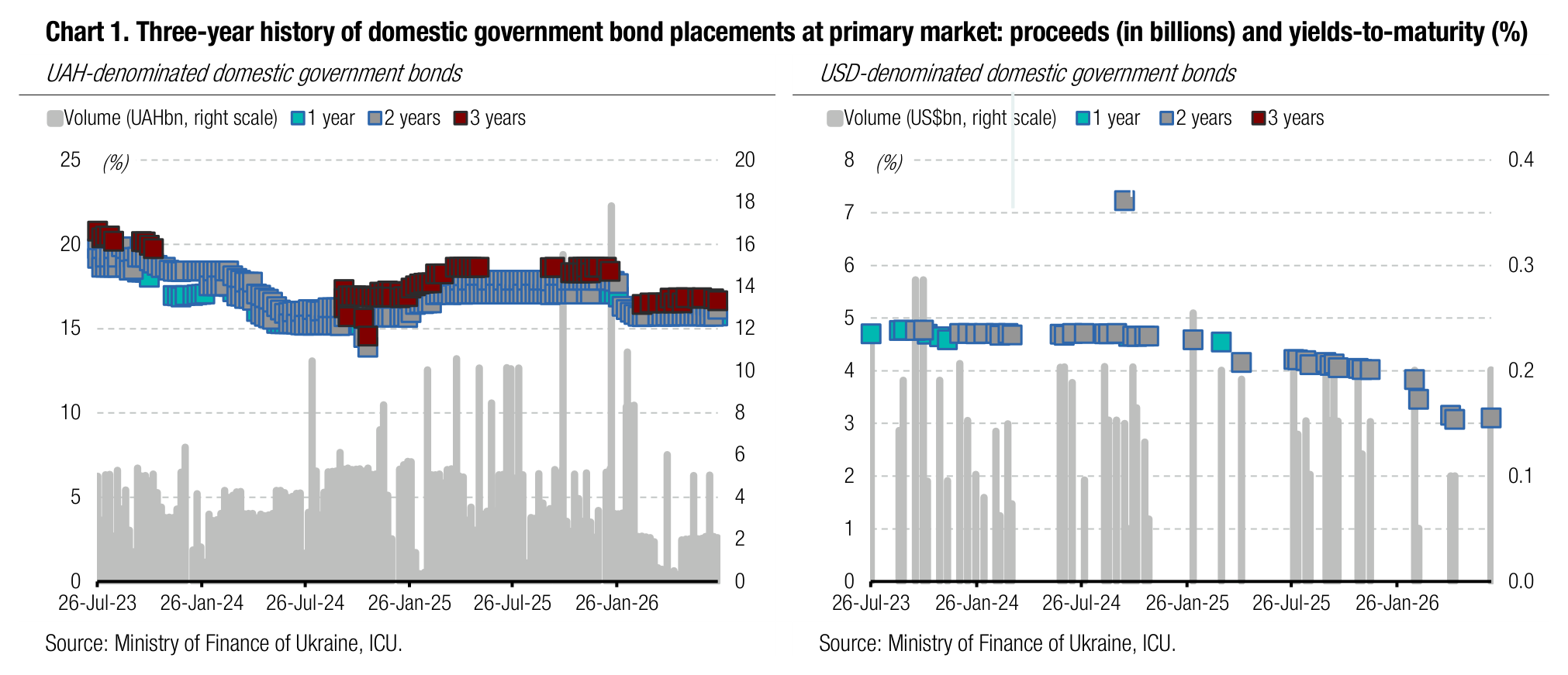

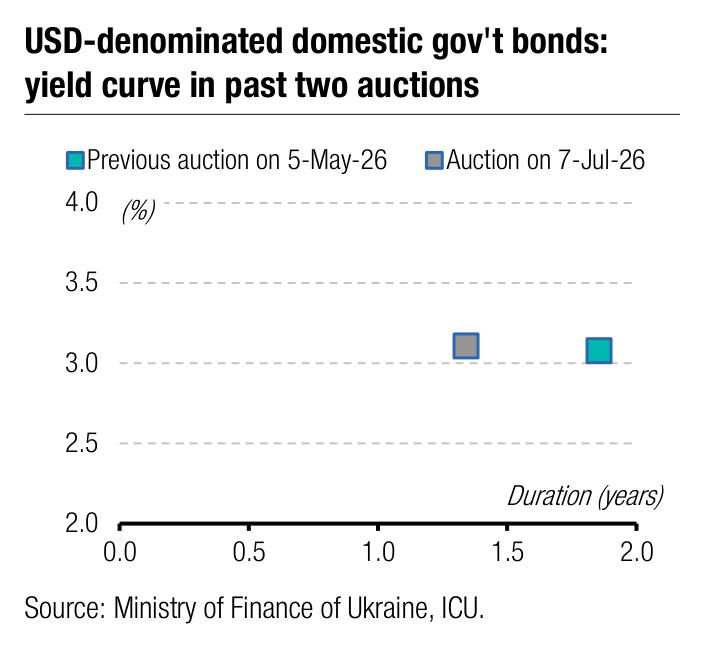
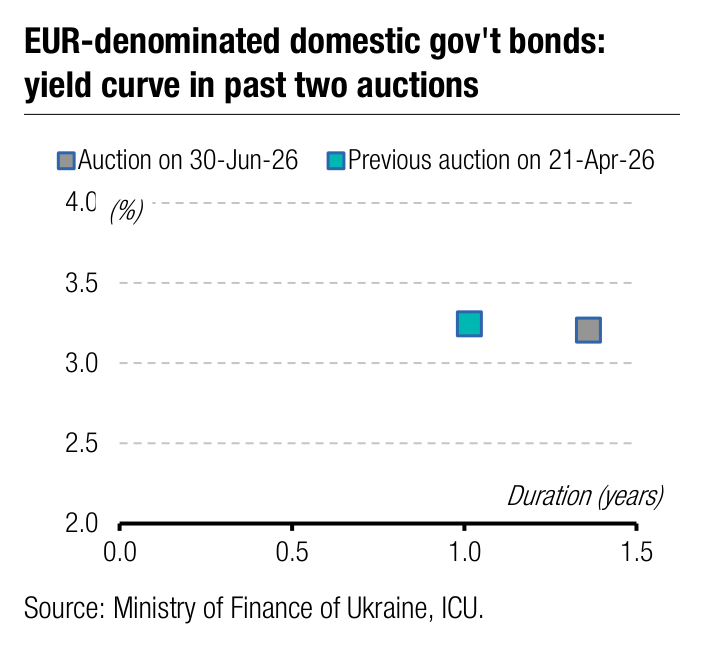
Yesterday, the vast majority of demand was for longer instruments, while demand for one-year government bonds barely exceeded supply.
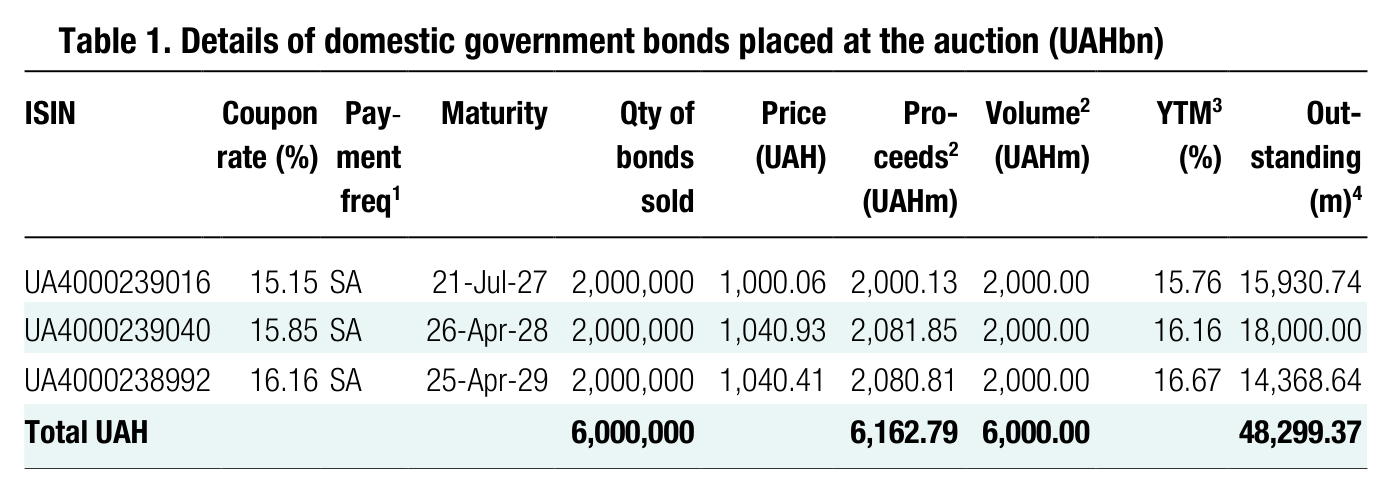
Note: [1] payment frequency abbreviations: M - monthly, Qtly - quarterly, SA - semi-annually, @Mty - at maturity date; [2] proceeds and volumes for the USD-denominated bonds are calculated based on the previous day's exchange rate 44.48/USD, 51.04/EUR; [3] yields on coupon-bearing bonds are effective yields to maturity. Sources: Ministry of Finance of Ukraine, Bloomberg, ICU.
For the one-year bill, the Ministry of Finance received 26 bids, which slightly exceeded supply by only UAH63m. The ministry satisfied all of them, although some of them, at the maximum rate, were satisfied slightly below the bid amount. Yields did not change much: the cut-off rate remained at 15.15%, and the weighted average increased by only 1bp to 15.14%.
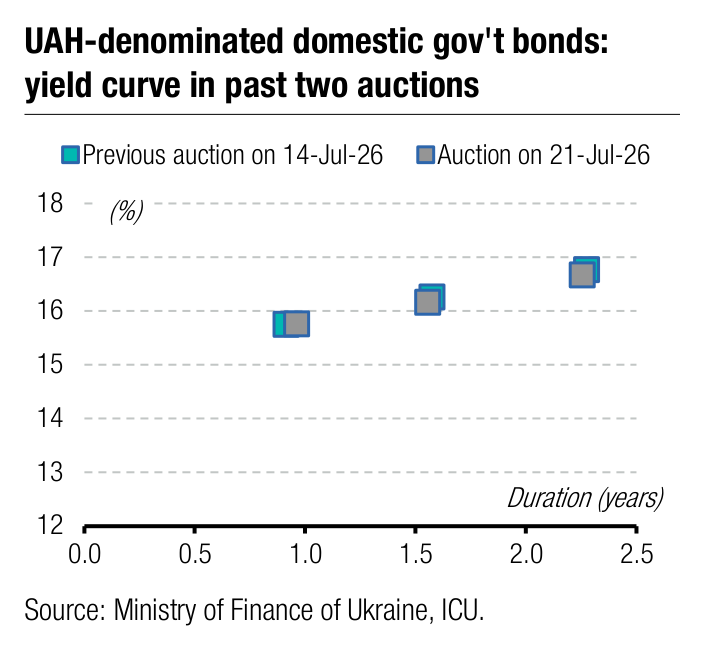
The 1.8-year security received almost fourfold oversubscription in 30 bids. Nine of them were rejected outright; the vast majority of the remaining demand was likely only partially satisfied. The Ministry of Finance placed UAH0.6bn in non-competitive bids (at the weighted-average yield) and distributed the remaining securities among competitive bids. The minimum bid rate remained at 15.5%, but the cut-off rate decreased by 10bp to 15.55%, and the weighted average yield slid by9 bp to 15.51%.
The 2.8-year note received even greater oversubscription, 4.6x. Out of 40 bids, the Ministry of Finance satisfied only 29, very similar to the shorter instrument: UAH0.6bn of bonds were purchased through non-competitive bids and the rest through competitive bids. The minimum bid rate decreased by 9bp to 15.96%, the cut-off rate declined by 8bp to 16%, and the weighted average yield slid by 10bp to 15.98%.
Increased interest in longer-term securities, which allow locking in yields for longer periods, led to greater competition and higher oversubscription, with more bids seeking different yields. This caused a gradual decrease in yields and a reduction in the term premium.
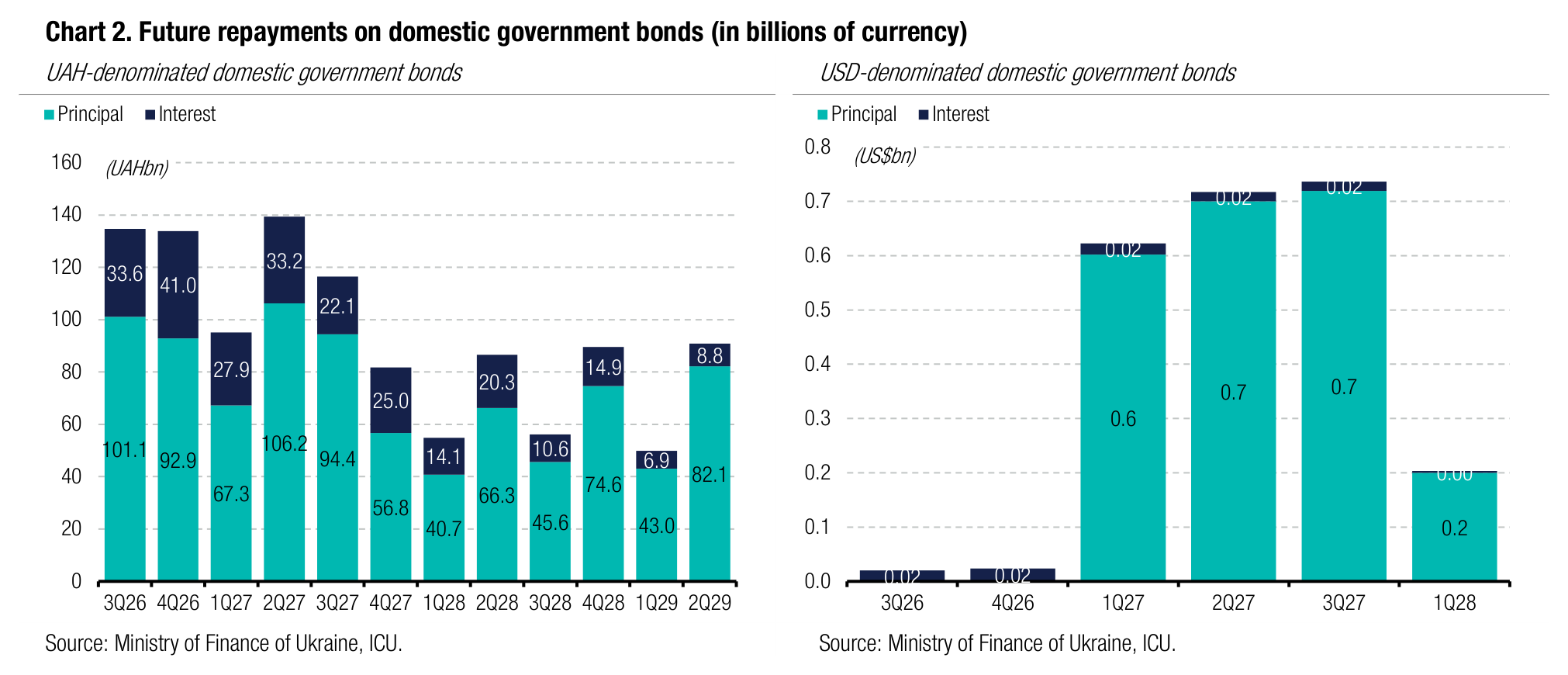
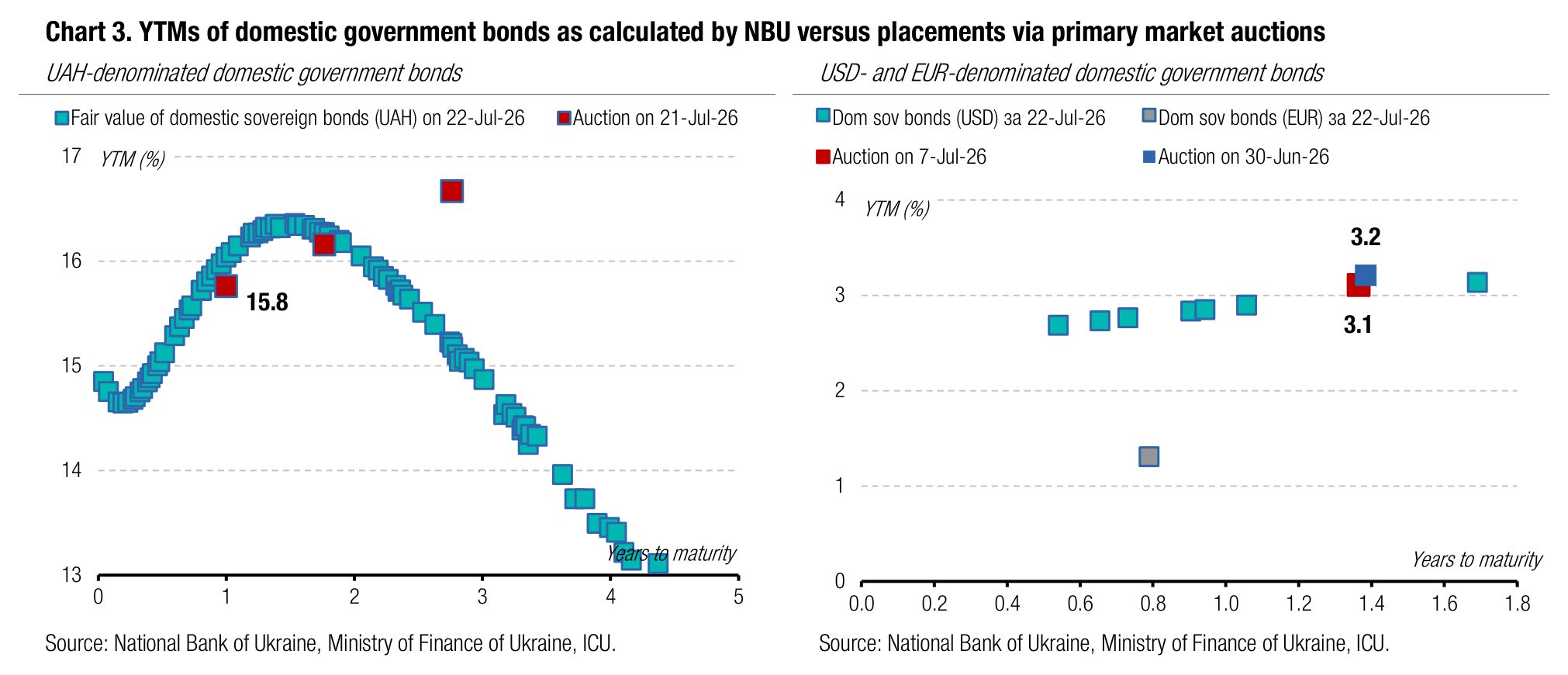
Appendix: Yields-to-maturity, repayments