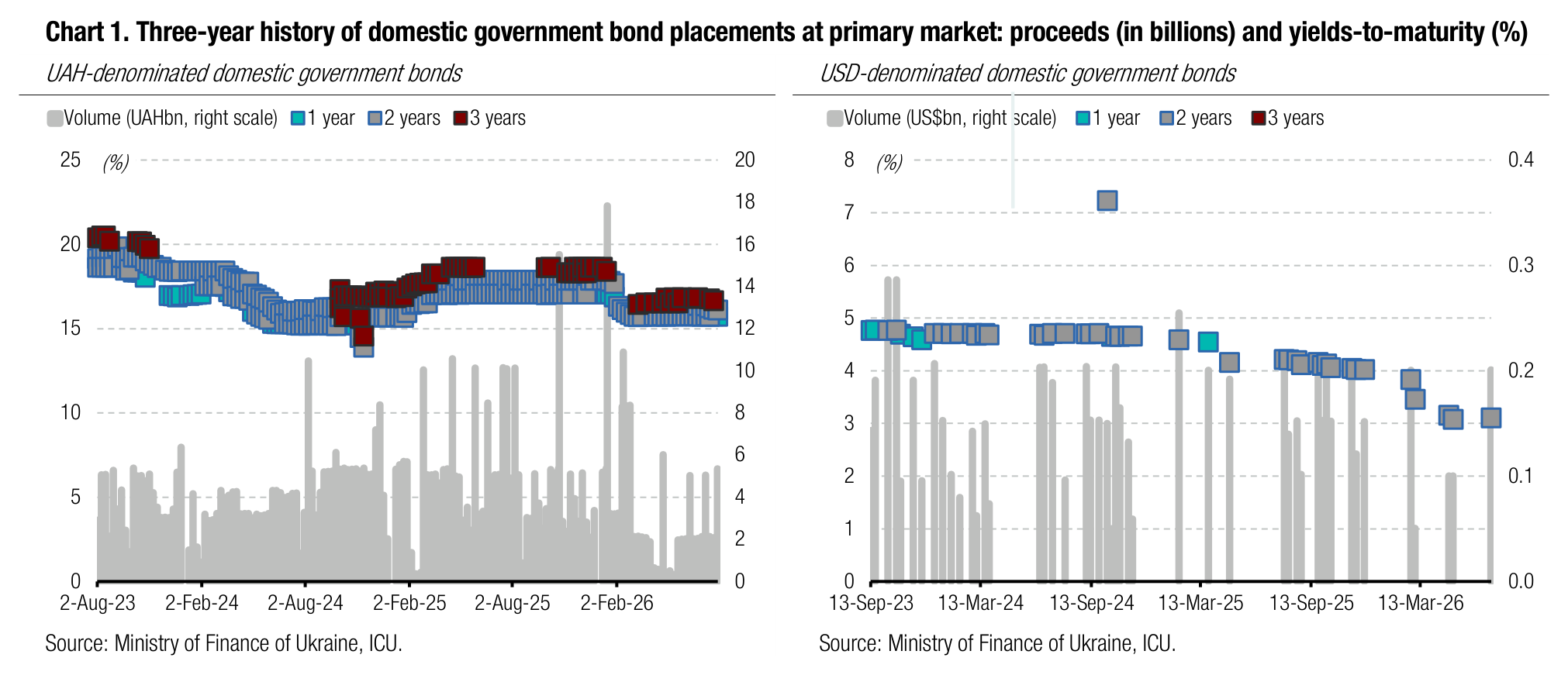

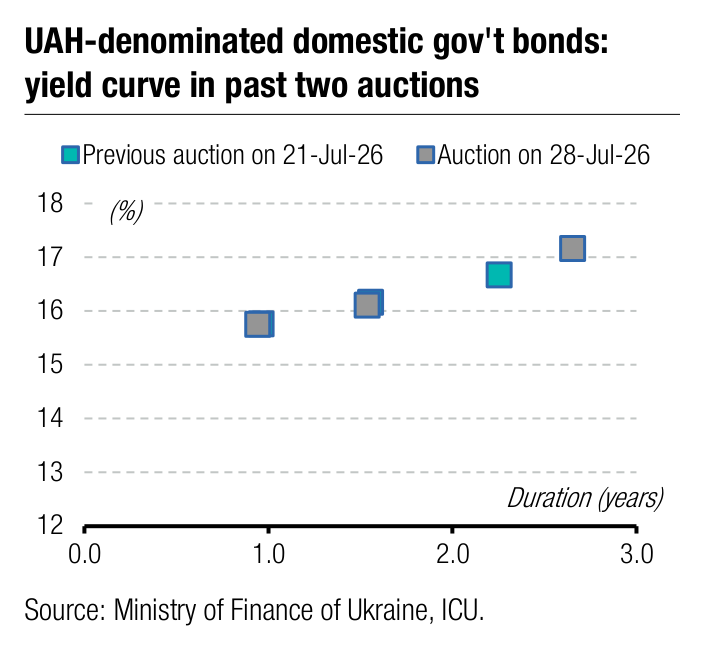
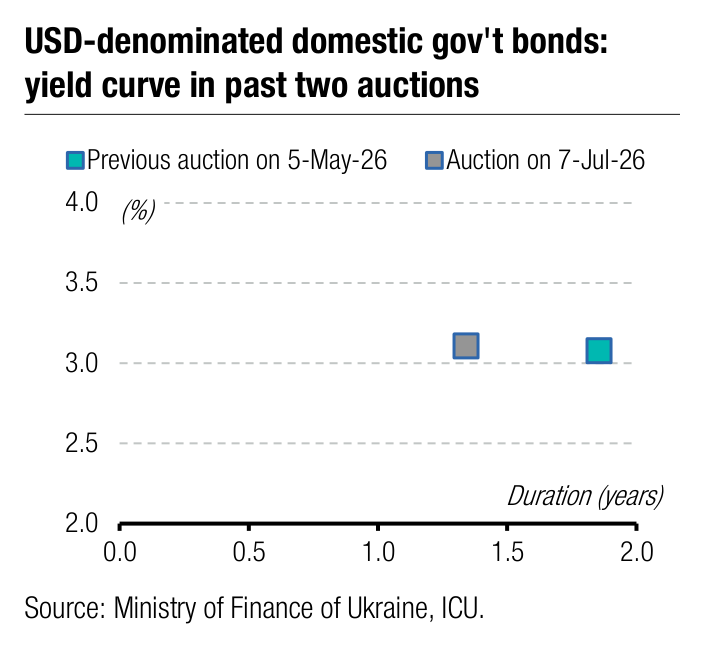
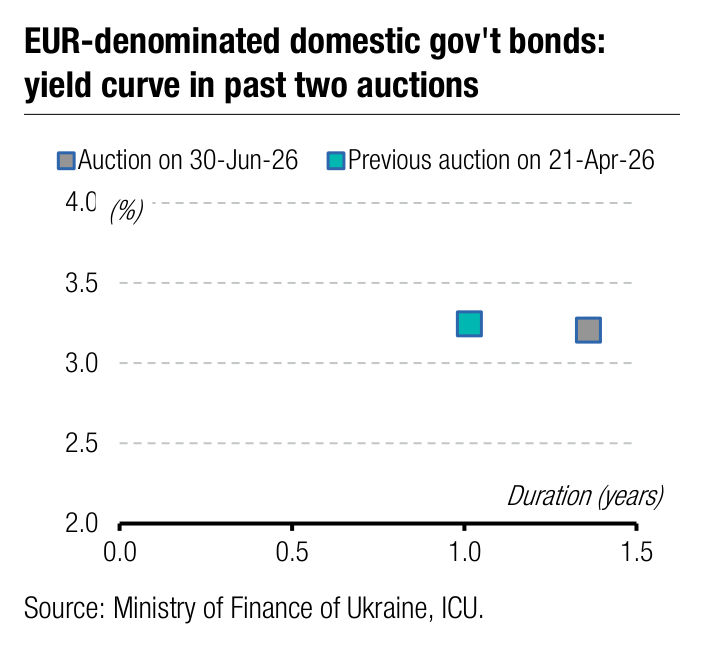
Yesterday, the Ministry of Finance placed the usual military bills with maturities of one year and almost two years, and also placed a new note, currently the longest maturity, over 3.5 years.
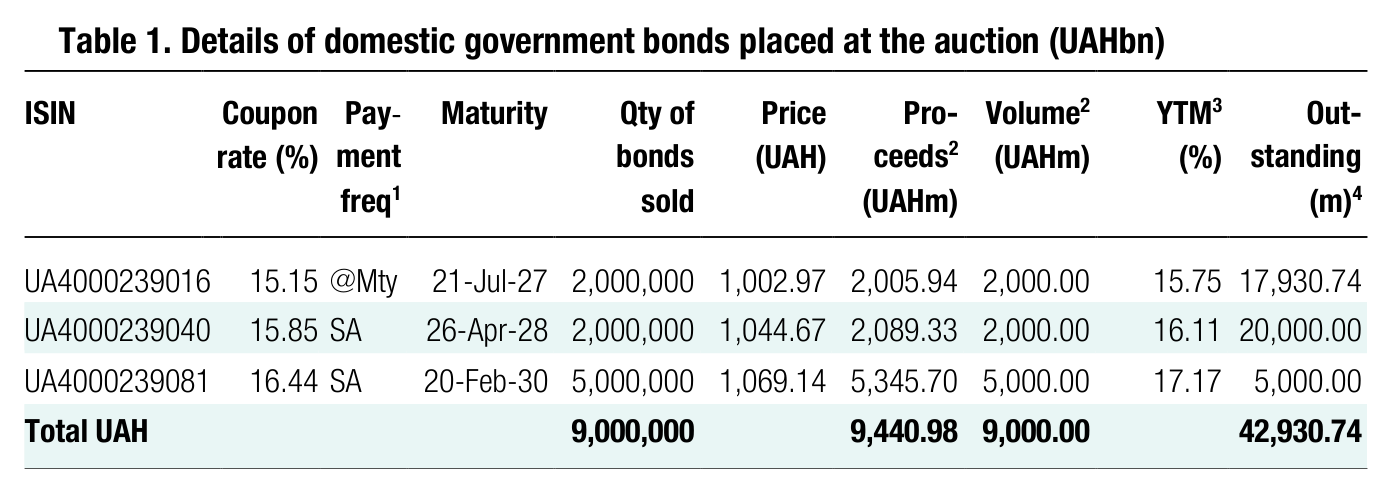
Note: [1] payment frequency abbreviations: M - monthly, Qtly - quarterly, SA - semi-annually, @Mty - at maturity date; [2] proceeds and volumes for the USD-denominated bonds are calculated based on the previous day's exchange rate 44.48/USD, 51.04/EUR; [3] yields on coupon-bearing bonds are effective yields to maturity. Sources: Ministry of Finance of Ukraine, Bloomberg, ICU.
One-year paper again collected bids at a level slightly above supply, with yields no higher than the cut-off rate—which has not changed since March—15.15%. At the same time, the rate minimum in bids slid to 15%, reducing the weighted average rate by 1bp to 15.13%.
The bid-to-cover ratio for 1.8-year bills was 2.3x, which led to a further decrease in yields on this security. The cut-off rate slid by another 2bp, and the weighted average yield decreased by 5bp. Unexpectedly, the Ministry of Finance decided to satisfy all non-competitive demand, selling almost 90% of bonds via non-competitive bids (satisfied under the weighted average yield) instead of the usual fulfilment rate of up to 30%. With this decision, the MoF slowed the decline in yields on this paper.
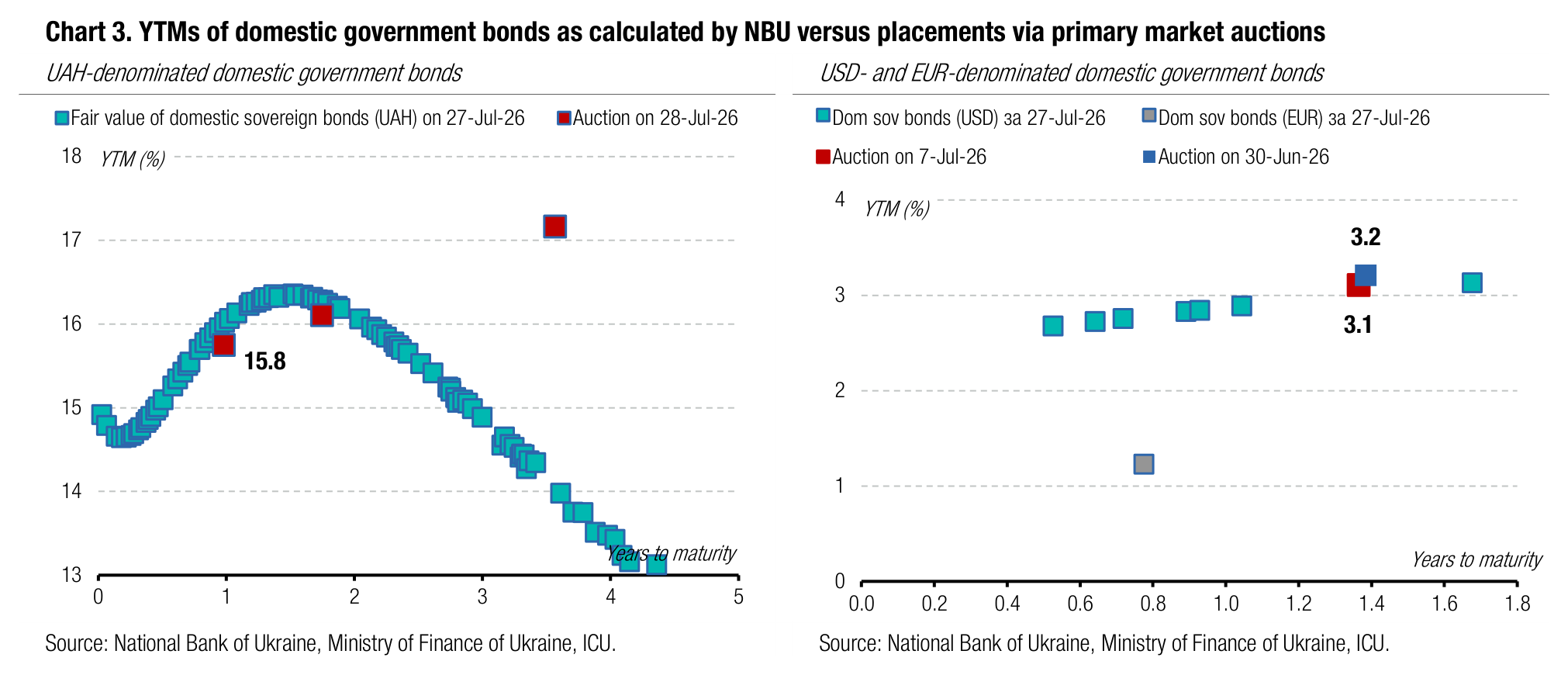
Most interesting was the placement of a new ordinary UAH note with maturity in February 2030. This paper collected 43 bids for almost UAH14bn with a 2.7x bid-to- cover ratio. Having allocated 30% (UAH1.5bn) for non-competitive bids, the remaining supply was exhausted on bids with a yield of 16.49%, and the weighted average yield was set at 16.44%.
Compared with the yield of the bond maturing in April 2029, which until yesterday was the longest in the primary bond market, the cut-off rate for new securities is higher by 49bp, and the weighted average by 46bp. Clearly, the ministry is ready to pay such a maturity premium for an extra 10 months.
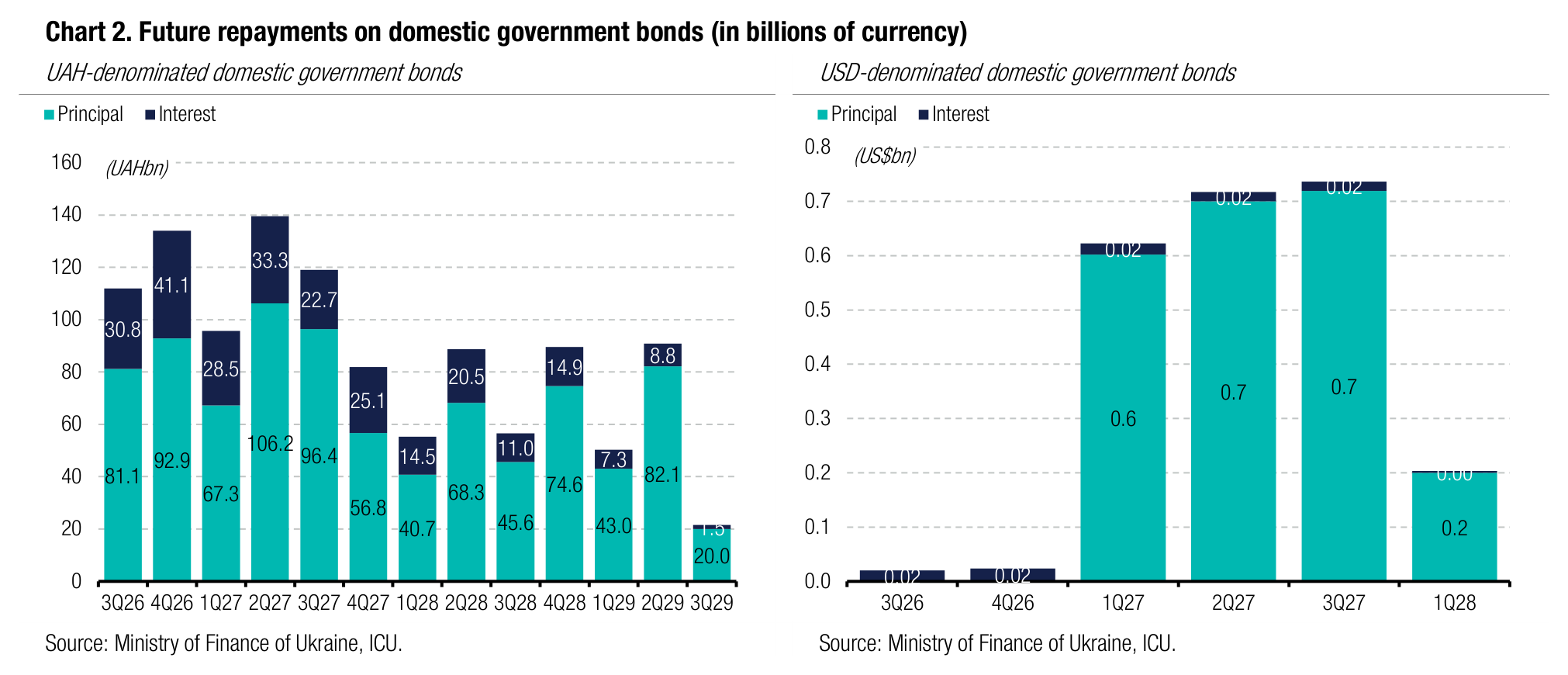
Appendix: Yields-to-maturity, repayments