

Ukrainian bond market
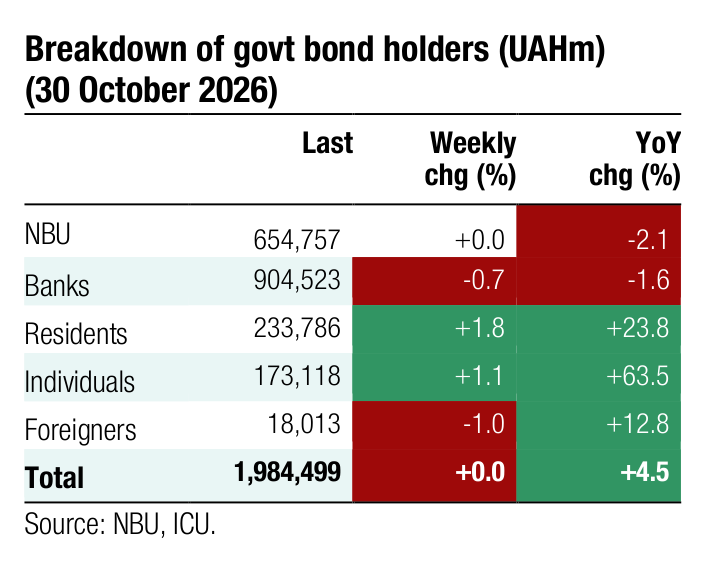
Rollover ratio pushed toward 100%
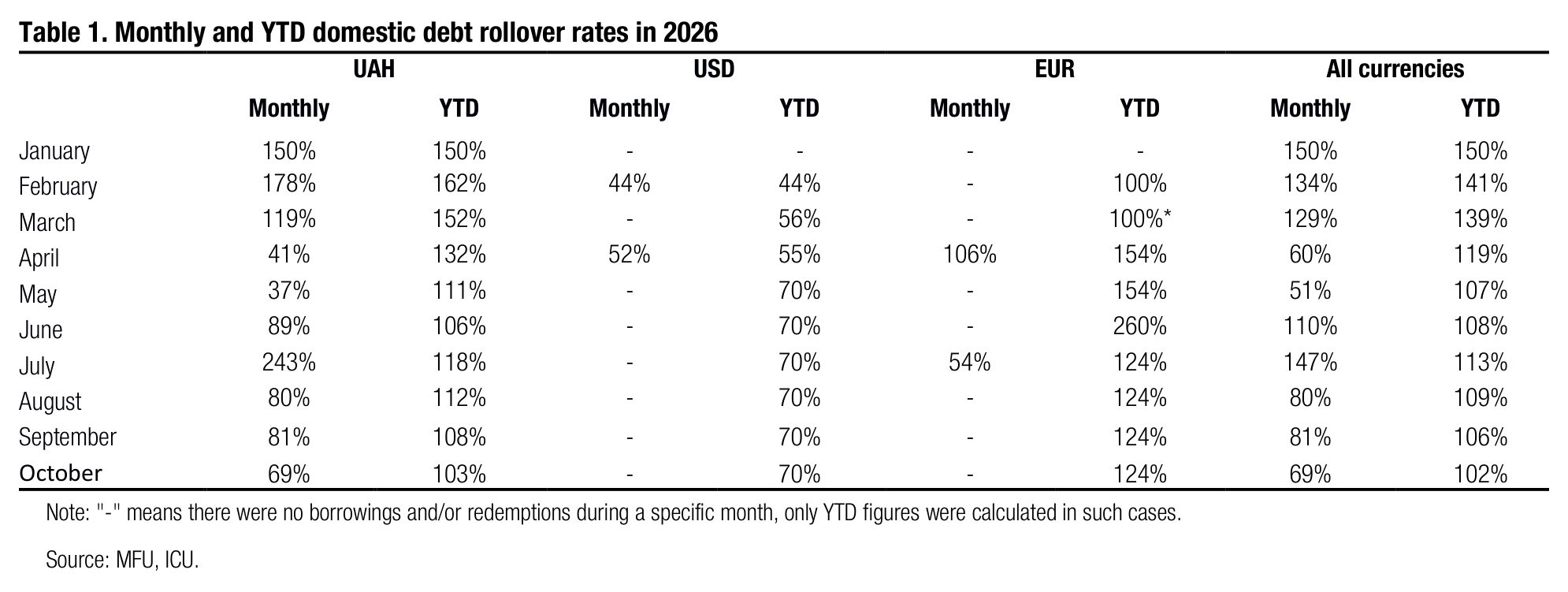
The overall rollover ratio for 10M26 decreased by another 4pp compared with 9M26, as the Ministry of Finance’s borrowings continued to fall short of redemptions (including those via exchange auctions).
In October, for the third consecutive month, the MoF issued and redeemed hryvnia- denominated bonds only. Consequently, the rollover ratios for USD and EUR-denominated debt remained at 70% and 124% for 10M26.
In October, the MoF sold bonds totalling only UAH25.8bn, including UAH17bn of "reserve" bonds (including via exchange auctions), UAH5bn of military bonds, and just UAH3.8bn of regular securities. Meanwhile, nearly UAH37.3bn worth of bonds were redeemed, including UAH20.9bn of "reserve" bonds (UAH11.8bn via exchange auctions).
Thus, the rollover ratio for UAH-denominated debt was 69% in October, taking the 10M26 ratio lower to 103% (vs. 108% in 9M26). The overall rollover ratio for domestic debt in all currencies declined to 102% in 10M26 (from 106% in 9M26).
The Ministry of Finance faces redemptions of UAH29.3bn in November and UAH21.8bn in December, while the budget plan leaves only UAH31.7bn to be borrowed from the domestic bond market. The ministry has scheduled four auctions each month, including the tapping of the earlier-issued reserve bonds and an offering of a new EUR-denominated bond.
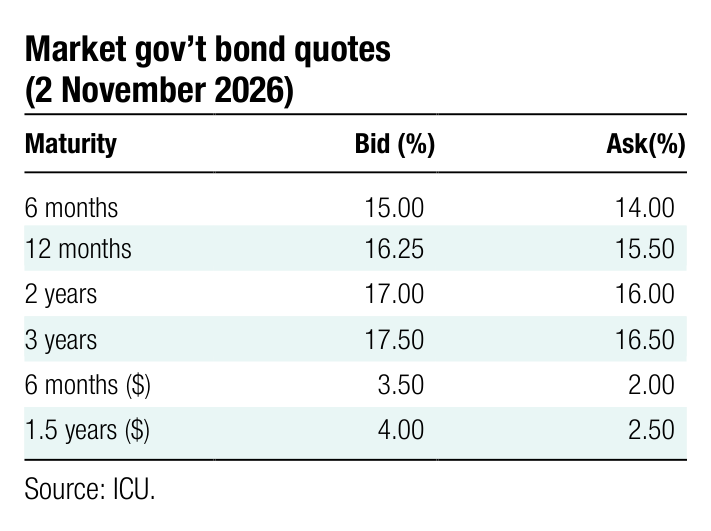
ICU view: Borrowings continued to decline in October, even though debt redemptions remained little changed vs September. This is generally consistent with the current budget plan, which implies the total annual borrowings are going to be lower than scheduled debt repayments. Despite a new hike in the key policy rate (see comment below), we do not expect any changes in yields on UAH bonds. The ministry is unlikely to see any difficulties in closing the current borrowing plan for the remainder of the year at current yields. Therefore, there is currently no incentive to raise interest rates at primary auctions. The issuance of euro-denominated bonds could significantly help the Ministry of Finance meet its budget targets.
Foreign exchange market
Interventions at an all-time high
In October, NBU interventions reached a new all-time high. This was driven by increased demand for foreign currency from both corporate and individual entities, fuelled by market anxiety about unexpected upsurge in USD rate.
Last week, the NBU FX sale interventions hit a record high of US$1.8bn. Total interventions for October totaled $6 billion, also an all-time high. The National Bank attributes this increase to a rise in budget expenditures and the subsequent reallocation of funds into the FX market. The net inflow of funds from the budget into the banking system grew by 30% MoM in October.
Net foreign currency purchases by bank clients, both in corporate and retail segments, continued to rise, reaching approximately US$5.4bn.
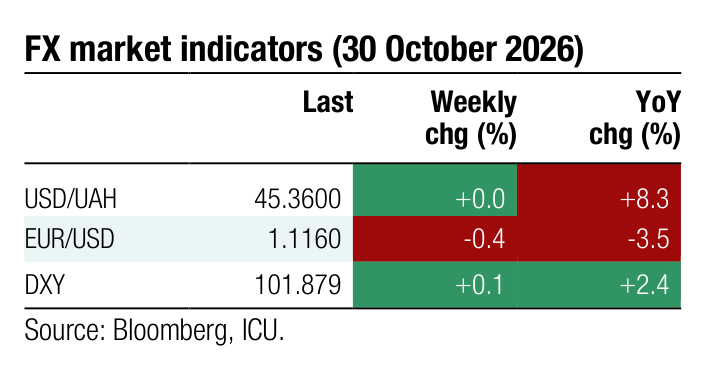
Thus, after the exchange rate had remained within the UAH44.5–45.0/US$ range for several consecutive months, the NBU determined that continuing to cap the US dollar's price was no longer appropriate. It allowed the rate to rise sharply, reaching nearly UAH45.7/US$ on the interbank market. However, during the final days of the month, the NBU was forced to intervene heavily to curb depreciation sentiment, ultimately closing the month with an official USD/UAH exchange rate of UAH45.35/US$. Thus, in October, the official exchange rate had weakened by 1.5% and by 7.1% YTD.
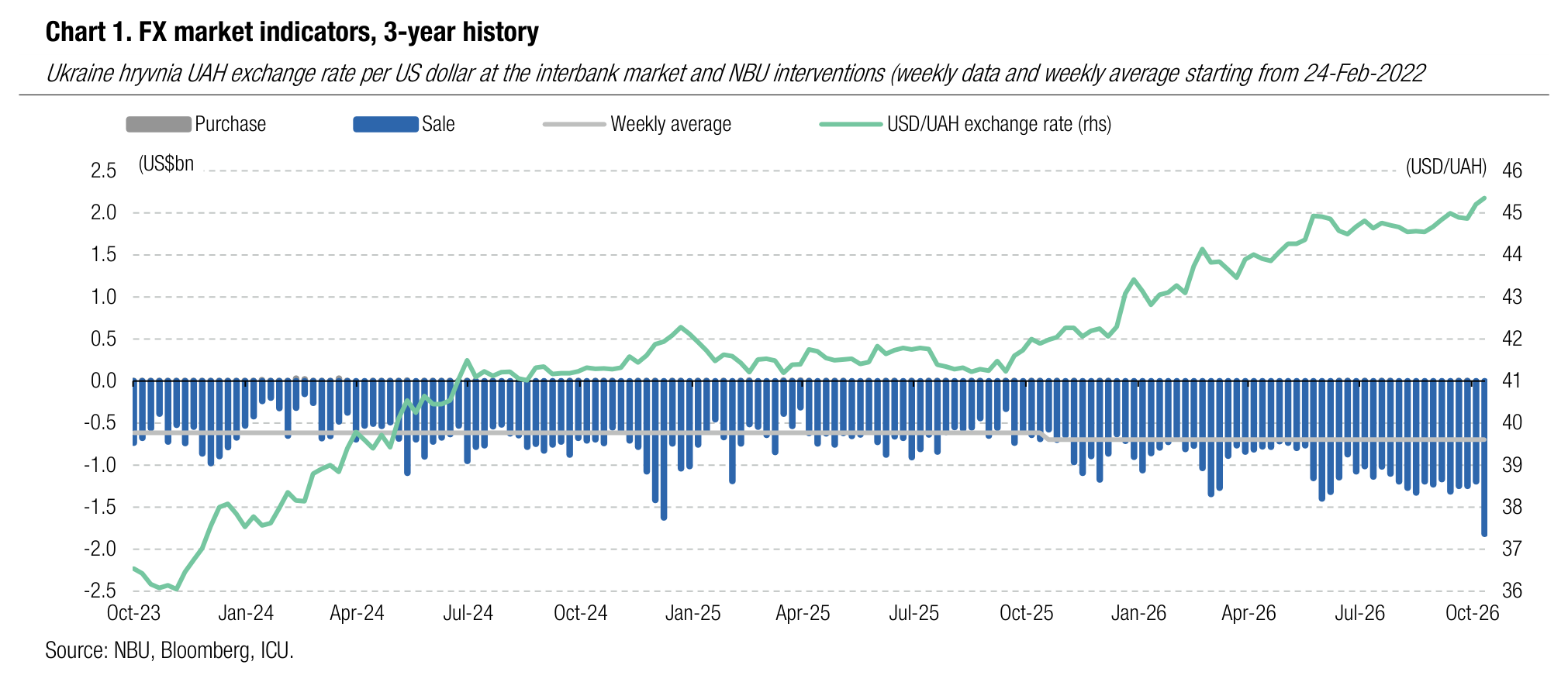
ICU view: During the first weeks of October, the National Bank did not rush to weaken the hryvnia, allowing the exchange rate to fluctuate in both directions while only occasionally crossing the UAH45/US$ mark. However, a surge in net foreign currency purchases last week—driven by both legal entities (most likely for the import of components for domestic weaponry procured under the USL program) and households—compelled the NBU to reconsider its approach to exchange rate formation. While the NBU attributes heightened interventions to an upsurge in budget expenditures, we think the sharp hryvnia weakening was brought about by market jitters and triggered an additional wave of demand. Consequently, the central bank was forced to significantly increase its foreign currency sales to curb the devaluation. We believe that the NBU remains unprepared for a sharp devaluation and is unlikely to allow the US dollar to rise significantly above the levels seen last week.
Economics
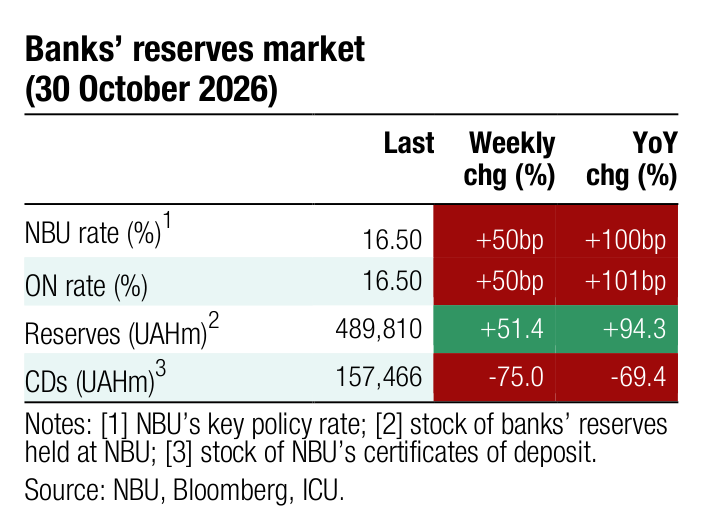
NBU hikes key rate to 16.5%
The regulator raised the key policy rate by 50 bps to 16.5%, its third consecutive hike, citing a significant increase in price pressures and deteriorating inflation expectations, and now expects to hold the rate at this level until Q2 2027.
Inflation accelerated to 10.0% YoY in September and core inflation to 8.8% YoY, both noticeably above the NBU's July forecast, driven by higher fuel prices amid the war in the Middle East and intensified russian attacks on logistics infrastructure. Inflation expectations of banks and analysts deteriorated markedly. The NBU raised its 2026 inflation forecast to 12.5% and expects a slowdown to 7.3% in 2027. The 2026 real GDP forecast was cut to - 0.4%, as the russian air attacks subtracted 1.9pp, while the financing assumptions of around US$50bn of direct budget support this year and US$52bn in 2027 keep reserves above US$62bn.
ICU view: We see 16.5% as the peak of the tightening cycle. However, with inflation peaking only around the turn of the year and the hryvnia under renewed pressure, we expect the NBU to hold the rate through 1H27 and start cutting in July 2027 rather than in April, as its forecast implies. One more 50bp hike in December or January is possible if inflation overshoots the forecast, FX pressure persists, or the roughly US$30bn of financing still expected this year is delayed.
Foreign trade deficit hits new high
Ukraine’s foreign trade deficit kept deteriorating in September and reached an all-time high of US$7.0bn (US$54bn in 9M26) on growing import of weapons and their components. To a significant extent, the trade deficit was offset with continued inflows of budgetary grants.
The deficit of trade in goods kept widening even though, surprisingly, export performance improved in September – the y/y decline narrowed to a reasonable 7% vs 19% in August. This improvement came on the back of Ukraine setting up alternative routes for export of grains. Import surged 18% in September (+17% in 9M26). The offsetting factor was the receipt of a US$3.8bn defense component of Ukraine Support Loan (USL) from the EU. The receipts of foreign financial aid, dominated by contingent loans, helped keep the C/A shortfall at a reasonable US$17.0bn in 9M26 vs. US$23.2bn in 9M25.
The financial account saw no noticeable surprises in September as private capital inflows were marginally positive and, on top of that, government borrowings totaled US$1.0bn. In 9M26, the financial account registered a surplus of US$6.6bn, nearly fully driven by concessional loans to the government. The combined balance of the current account and financial account was negative, and the central bank had to burn reserves to close the gap. NBU reserves were down 18% in 9M26 to US$47.1bn.
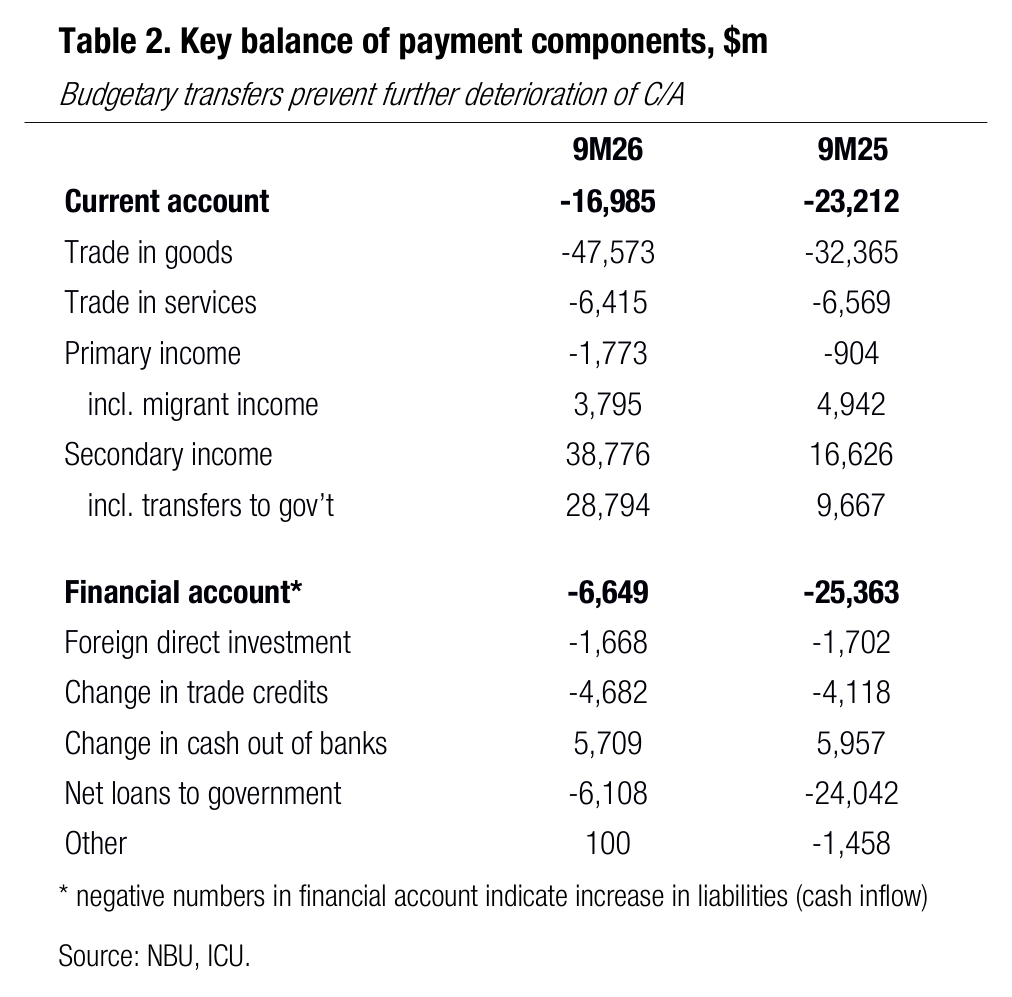
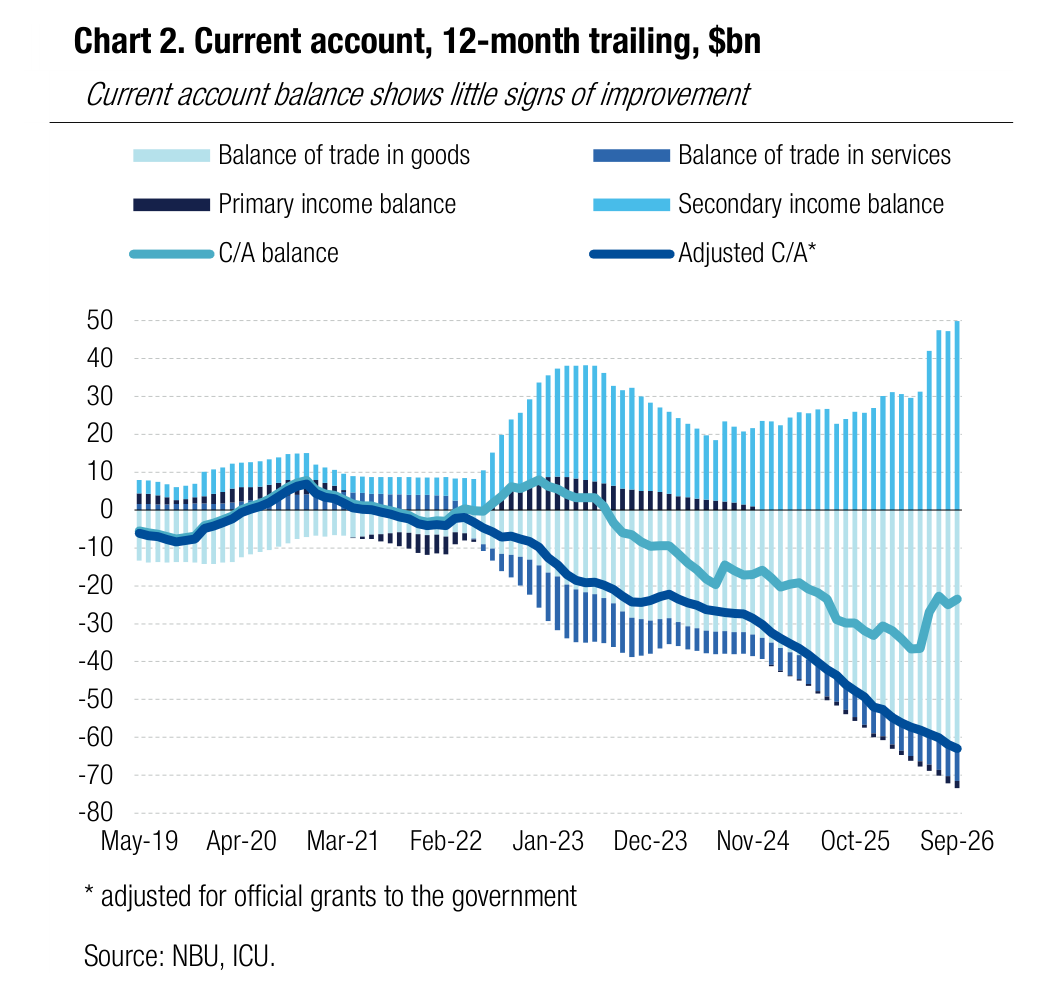
ICU view: The continued widening of foreign trade deficit is worrying, but one should keep in mind the bulk of the total increase is driven by purchases of foreign weapons and inputs for the local defense industry. A significant part of weaponry and munitions that were previously supplied by Ukraine’s partners for free is now being purchased by Ukraine with USL money with a direct impact on import statistics. Meanwhile, export continues to contract due to logistics bottlenecks that forced exporters to slash deliveries abroad. It’s not a surprise that Ukraine’s deficit of foreign trade will continue to widen and may exceed 35% of GDP in 2026. Yet, we remain of the view that generous external funding in 2026 and 2027 will fully offset the trade deficit and enable the central bank to replenish reserves back to $60bn at end-2026.