

Ukrainian bond market
Market assesses impact of key rate hike
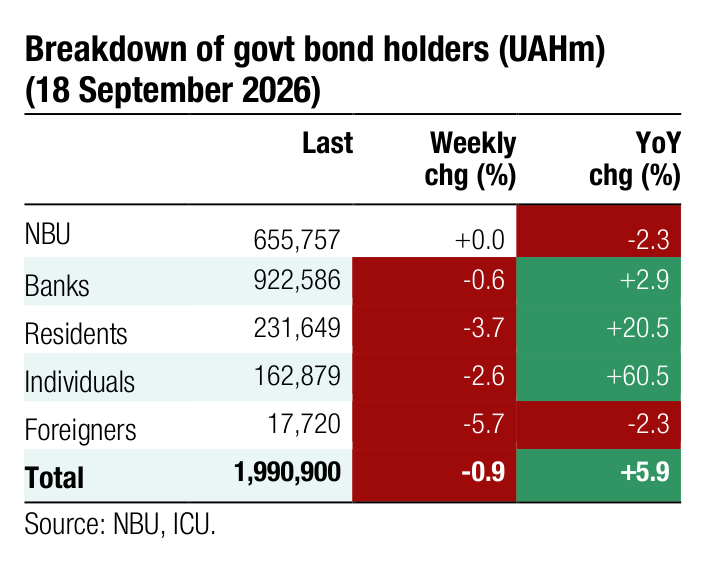
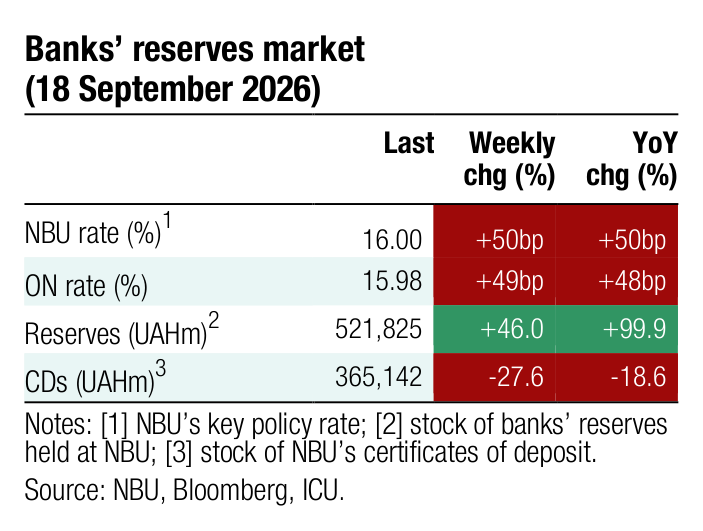
Domestic bond trading slowed significantly over the past two weeks as investors awaited the NBU's decision on the key policy rate. They are now waiting to discover the Ministry of Finance's reaction to the hike.
Over the last two weeks, the volume of UAH bond trading fell to UAH11bn per week—almost one-third below weekly average YTD. If local FX debt is included, the total trading volume stood at UAH11.5bn, UAH3bn above this year's low recorded in late April. This is the second time this year that trading saw a significant contraction ahead of an NBU monetary policy committee meeting.
The share of short-term bonds maturing in less than a year rose to 65%, up from below 50% just a few weeks ago. The share of FX-denominated bonds in total trading remained below 5% for 10 consecutive weeks, partly due to the MoF’s reluctance to issue new FX debt since early July.
To meet the current full-year budget plan, the MoF needs to borrow less than UAH 78bn in the remaining months. A refinancing of UAH35bn worth of reserve bonds is nothing but guaranteed, and that leaves only UAH40bn in borrowings through regular and military bonds (an average of UAH3bn per week). That pace is consistent with borrowings seen in August.
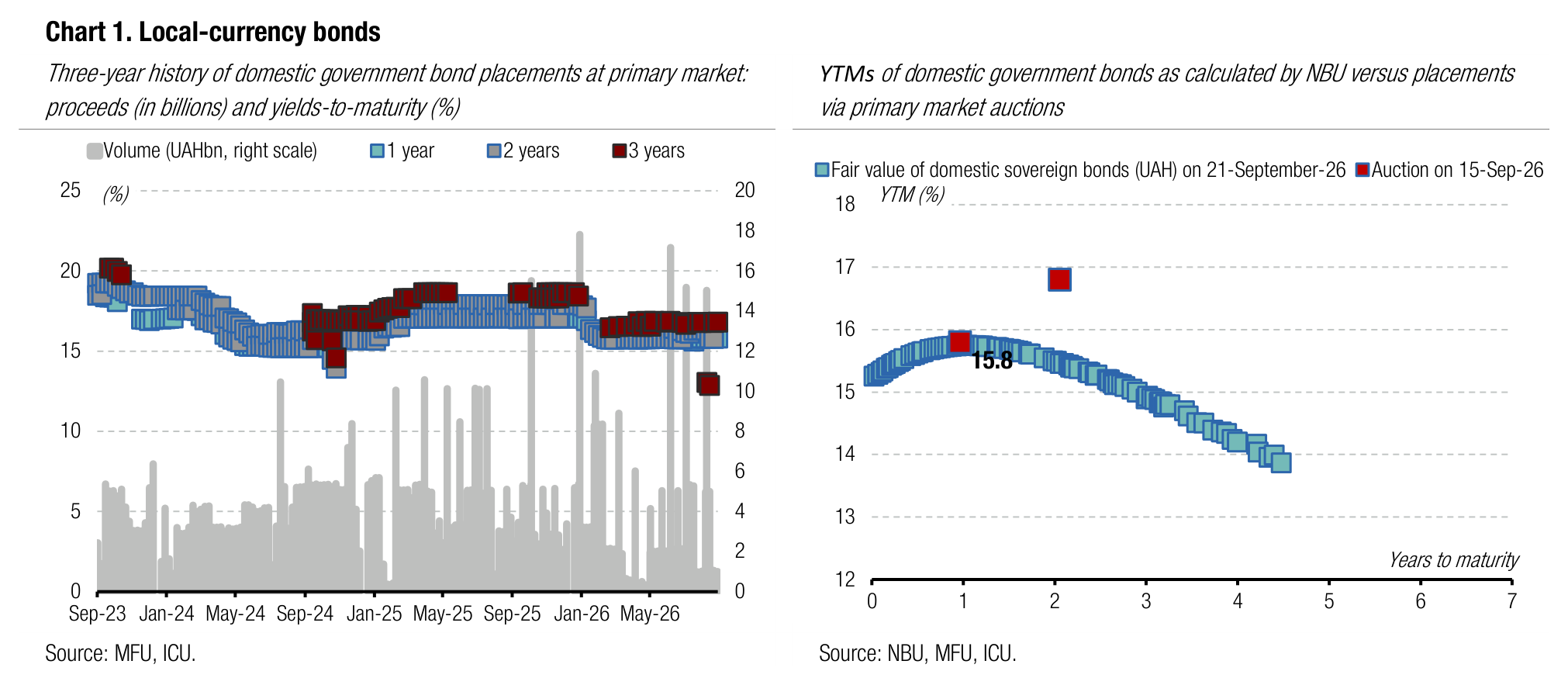
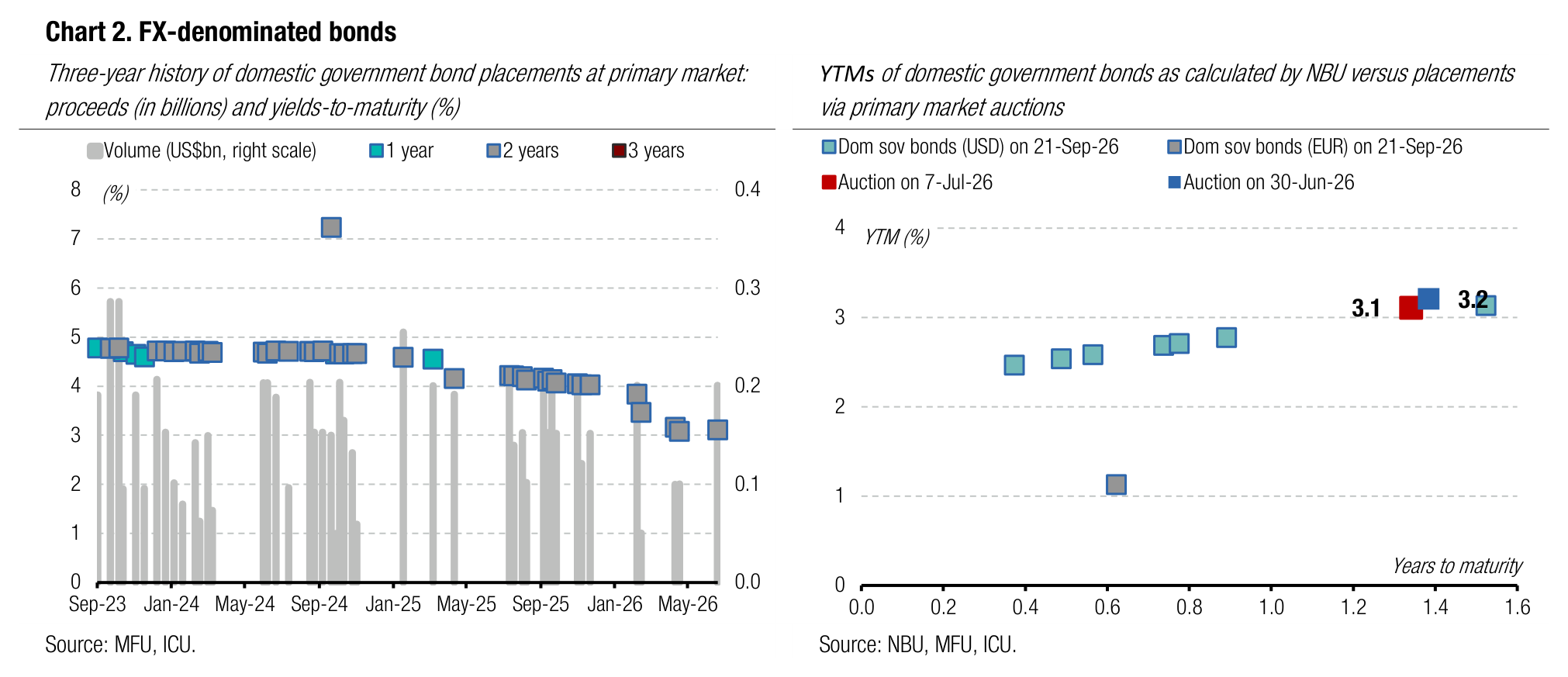
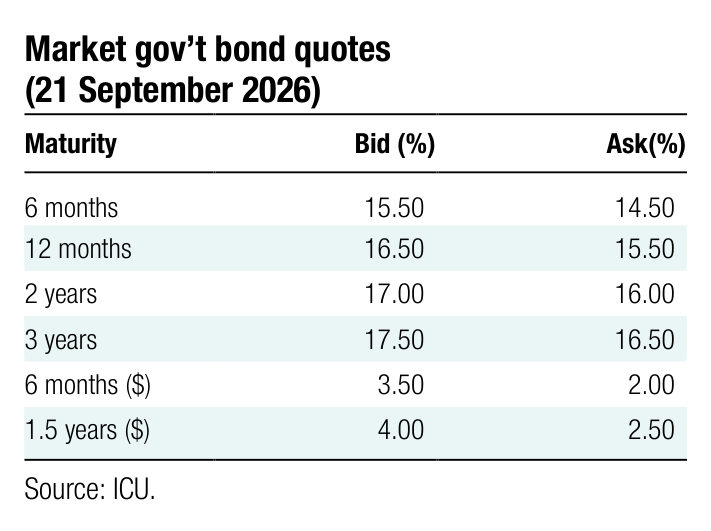
ICU view: Given the limited current borrowing needs, we do not expect the Ministry of Finance to react quickly to the National Bank's decision to raise the key policy rate by another 50bp to 16%. Most likely, the ministry will do its best to maintain current yields, as it is focused on placing longer-dated bonds whose pricing is shaped not only by the current key policy rate, but also by future rate expectations. Only if the domestic borrowing plan for 4Q26 is significantly increased, then the Ministry of Finance might respond by raising yields on UAH bonds towards the end of the year.
Government approves public debt management strategy
The government recently approved a medium-term public debt management strategy for the next three years. Its key components include reducing reliance on external debt financing and the development of the domestic capital market.
The debt management strategy envisions that in 2028–2029, the government will aim to cover the budget financing gap primarily through external grants rather than loans. Consequently, external borrowings are set to decrease.
The MoF plans to maintain the outstanding volume of the domestic bonds at the current level. Domestic borrowings will only be conducted to replace maturing securities. However, the MoF reserves the right to increase borrowings should the budget need additional funding to meet the security and defence sectors’ demands. According to the document, the MoF does not plan to issue short-term (under one year) government bonds. The focus will be on securities with maturities of 2–4 years. At the same time, the Ministry of Finance will continue issuing “reserve” bonds that banks buy and keep to meet a portion of their mandatory reserve requirements.
Furthermore, the strategy envisions an increase in the share of non-residents in the domestic bond market should the NBU's ease capital controls. The government will also continue to promote bonds among retail investors as they remain an alternative to bank deposits.
The strategy assumes that monetary financing of the budget will be avoided and the NBU will not purchase government bonds, which the central bank last time did in 2022 following the start of russia full-scale invasion. On the other hand, the Ministry of Finance also keeps open an option to exchange bonds held by the NBU for new paper. Such an exchange could involve existing bonds linked to the CPI and the NBU's key policy rate.
ICU view: The document adopted by the government summarises the MoF's plans for the coming years and outlines key debt-management actions and the future outlook. It reaffirms the priority of external grants over borrowings. Although the baseline scenario does not anticipate an increase in the volume of domestic bonds outstanding, the government clearly indicates it expects retail investors to play a growing role in absorbing new issuances.
Foreign exchange market
NBU maintains high FX interventions
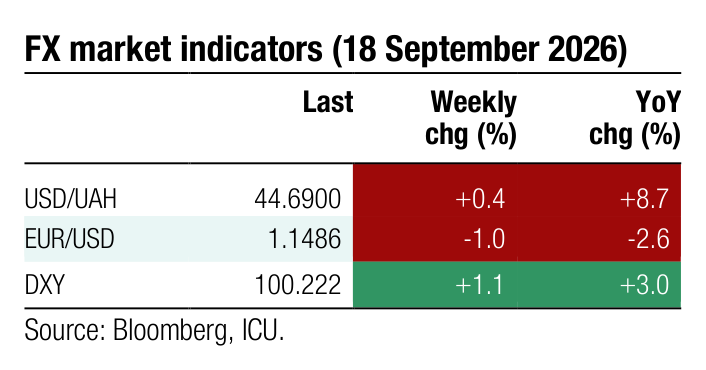
Last week, the NBU kept is FX interventions little changed, but allowed the hryvnia to weaken somewhat.
The FX market deficit remained almost unchanged WoW at US$0.8bn (in four business days), with net foreign currency purchases in the retail segment accounting for nearly a quarter of that amount.
At the same time, the NBU abandoned the temporary exchange rate cap of UAH44.6/US$ and allowed the USD/UAH rate to rise to UAH44.7/US$ by the end of the week. Meanwhile, the volume of interventions remained almost unchanged at US$1.2bn.
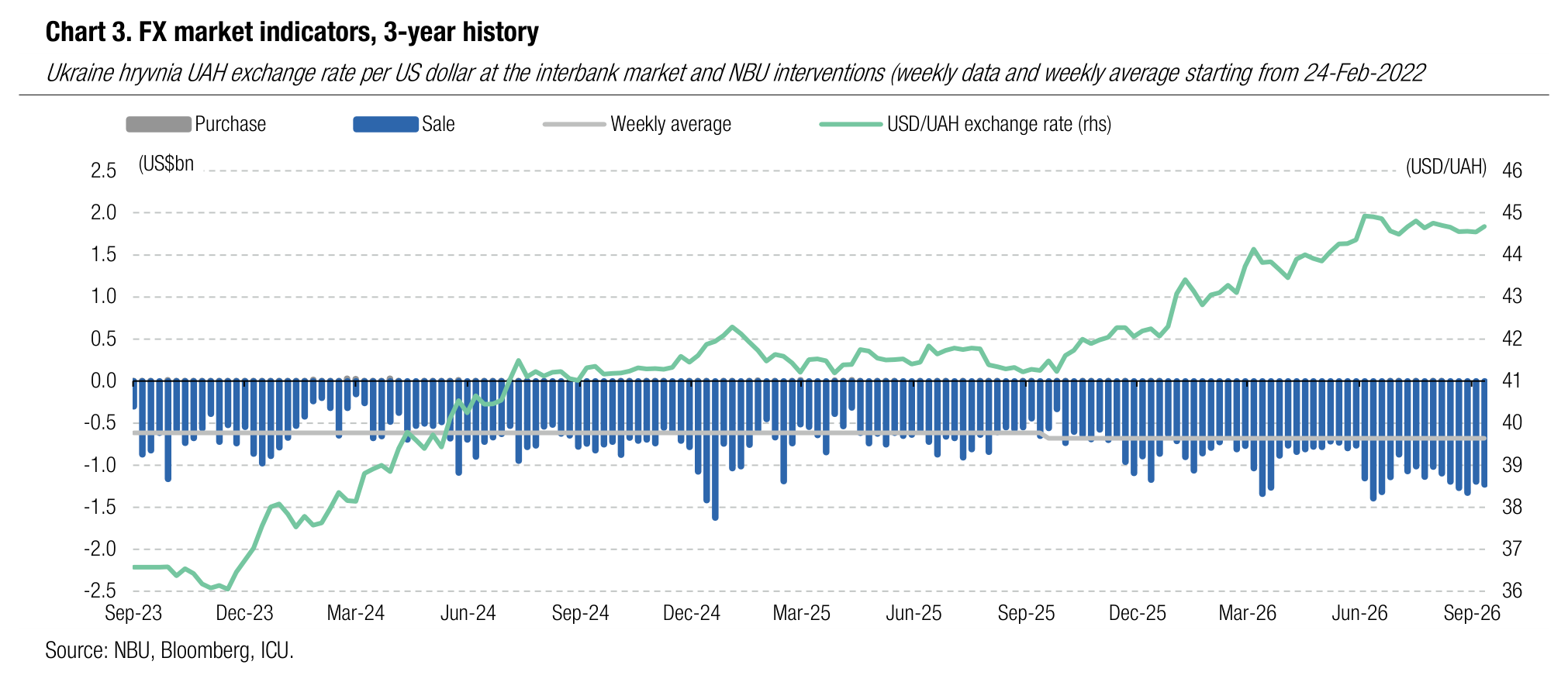
ICU view: The National Bank seems to be determined to keep reminding the market that the exchange rate remains flexible, and it allowed the hryvnia to weaken slightly while keeping interventions broadly steady. We expect the NBU to continue meeting all excess demand for foreign currency without any limitations. We maintain our view that the NBU will move toward UAH45.8/US$ by the end of the year.
Economics
NBU hikes key rate to 16%
The regulator raised the key policy rate by 50 bps to 16.0%, its second consecutive hike, citing persistent underlying price pressures, second-round effects from supply shocks, and higher medium-term inflation risks.
August inflation accelerated to 8.1% YoY, slightly above the trajectory of the NBU's July forecast, driven mainly by a sharper-than-expected rise in fuel prices amid the escalating war in the Middle East and by faster growth in some administered tariffs linked to russian strikes on critical infrastructure. Core inflation stayed high, fuelled by rising business costs for energy, logistics, and labour, while wages continued to grow rapidly and inflation expectations remained elevated.
The NBU has flagged that the near-term inflation path may run somewhat higher than previously projected. Since the July meeting, risks tied to the Middle East war — chiefly higher oil prices — have increased. The regulator also pointed to softer-than-expected external financing in July–August, which left fiscal policy more restrained and international reserves lower.
ICU view: Despite elevated risks, the real policy rate is firmly in positive territory and, on our estimates, should stay above 6% over the next 12 months. We see upside risks to inflation from oil prices, continued russian attacks on infrastructure, and the NBU's greater tolerance for hryvnia depreciation next year. With real rates already deeply positive, we think the tightening cycle is close to its peak, and we expect the regulator to hold at the 29 October meeting unless these risks intensify further.