

Ukrainian bond market
MoF adjusts offer following key rate hike
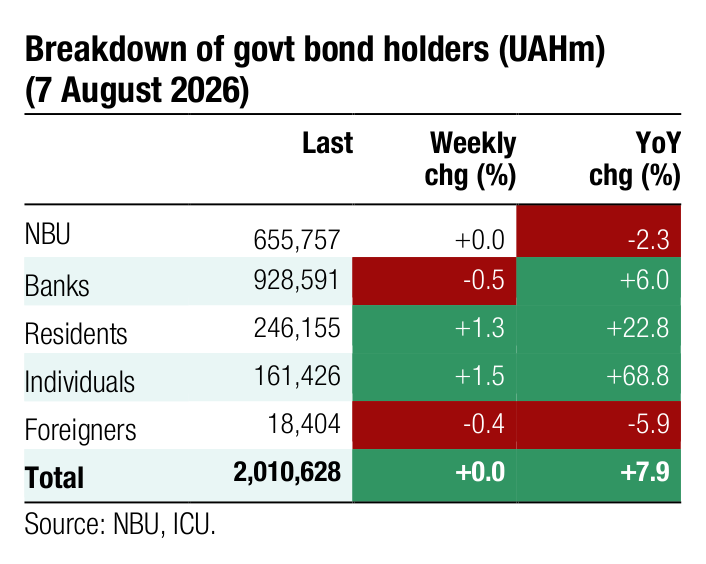
The reaction of the Ministry of Finance to the NBU's rate hike decision was quite restrained and predictable: the ministry sought to keep the yields on local debt broadly unchanged.
At the first auction following the key rate hike by 50bp to 15.5%, the MoF halved the offer cap for one- and 1.8-year military bills to UAH1bn, thus reinforcing competition for the paper and preventing an increase in yields. Without even the slightest indication the MoF is prepared to raise the rate, demand for one-year bonds was insignificant. Demand likely came from retail and corporate clients of banks.
Yields on a 1.8-year paper were up vs July auctions. The cut-off rate increased by 12bp to 15.65%, and the weighted average rate added 18bp to 15.64%. However, a longer history of two-year bond placements shows a more nuanced picture: yields are still lower than May levels: the cut-off rate is 22bp below the May level and the weighted average rate is 21bp below.
For one-year bills, the maximum bid rate remained 15.15%, while the minimum was 14.99%. This left the cut-off rate unchanged at 15.15%; the weighted average yield slid by 12bp to 15.01%.
The reserve bond yields did not change either. Compared with reserve paper placed in July, the cut-off rate was down by 14bp to 12.69%, and the weighted average slid by 16bp to 12.59%. However, the new security’s tenor is five months shorter vs that placed in July, which explains the difference in yields.
Tomorrow and next week, the Ministry of Finance will offer the same 12-month and 1.8-year securities, and will start offering new paper due in February 2029.
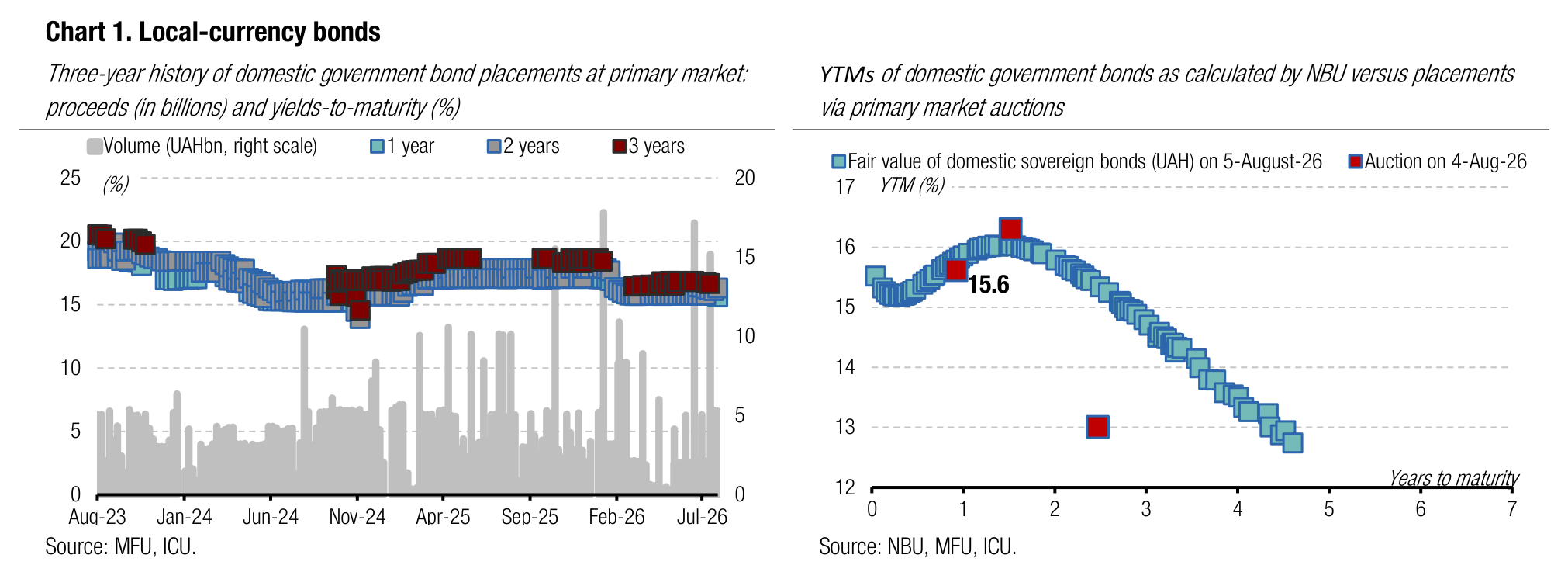
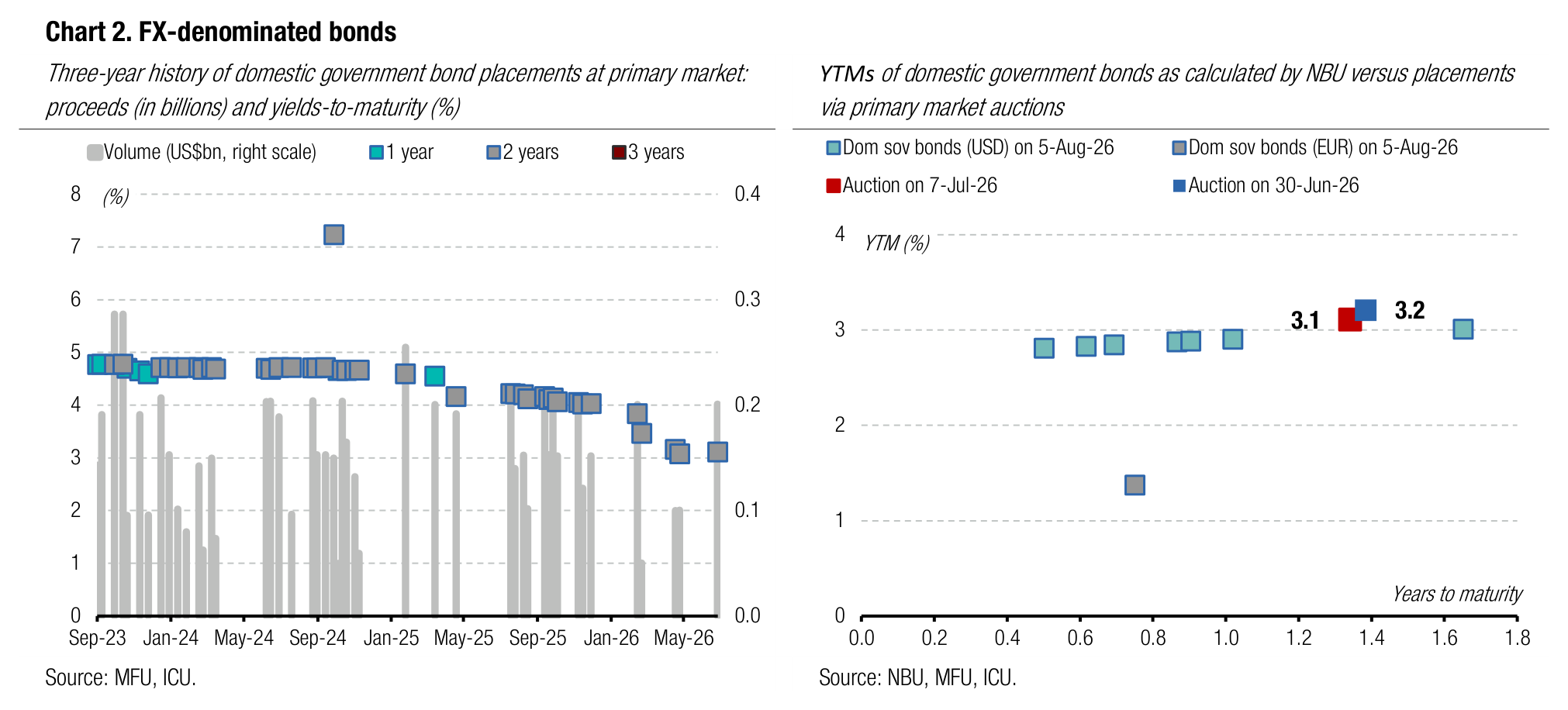
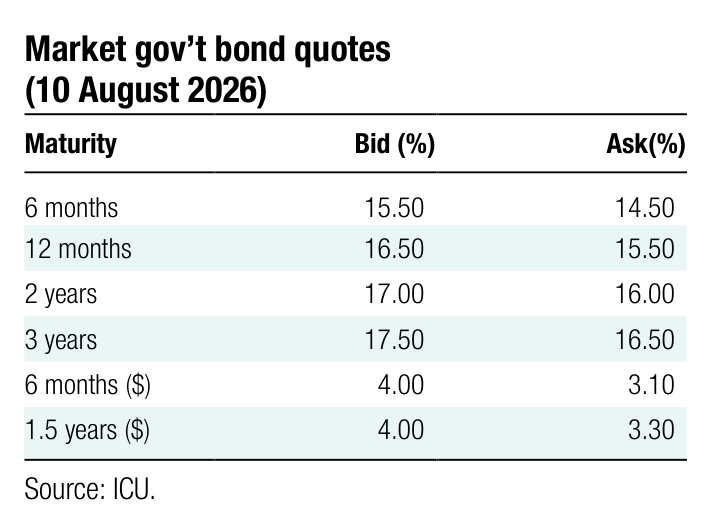
ICU view: The reaction of the MoF to the NBU's decision to raise the key rate was expectedly muted. Primary dealers and their clients were in no hurry to visibly revise bid rates. It was enough for the Ministry of Finance to only reverse the July decline in rates and the offer was sold in full. The secondary market also barely reacted to the change in the key rate. We expect a gradual correction in yields on bonds maturing in April 2028, towards levels seen in April-May, while yields on one-year securities will likely remain at current levels. Placements of such bonds are primarily targeted at retail and corporate clients who find the current yields sufficiently attractive. Yet, current yields on one-year bonds are hardly attractive now for banks that have unlimited access to overnight NBU CDs at 15.5%.
Ukrainian Eurobonds follow the global trend
Prices of Ukrainian Eurobonds barely changed last week, in line with the global trend in emerging markets.
The EMBI index fluctuated by no more than 0.4% per day last week and cumulatively added 0.5% WoW. Ukrainian securities followed the global trend in emerging markets, largely mirroring the EMBI index's fluctuations, albeit with a larger amplitude. Prices moved mostly within one cent and rose by 0.5-1.3% WoW, depending on the paper.
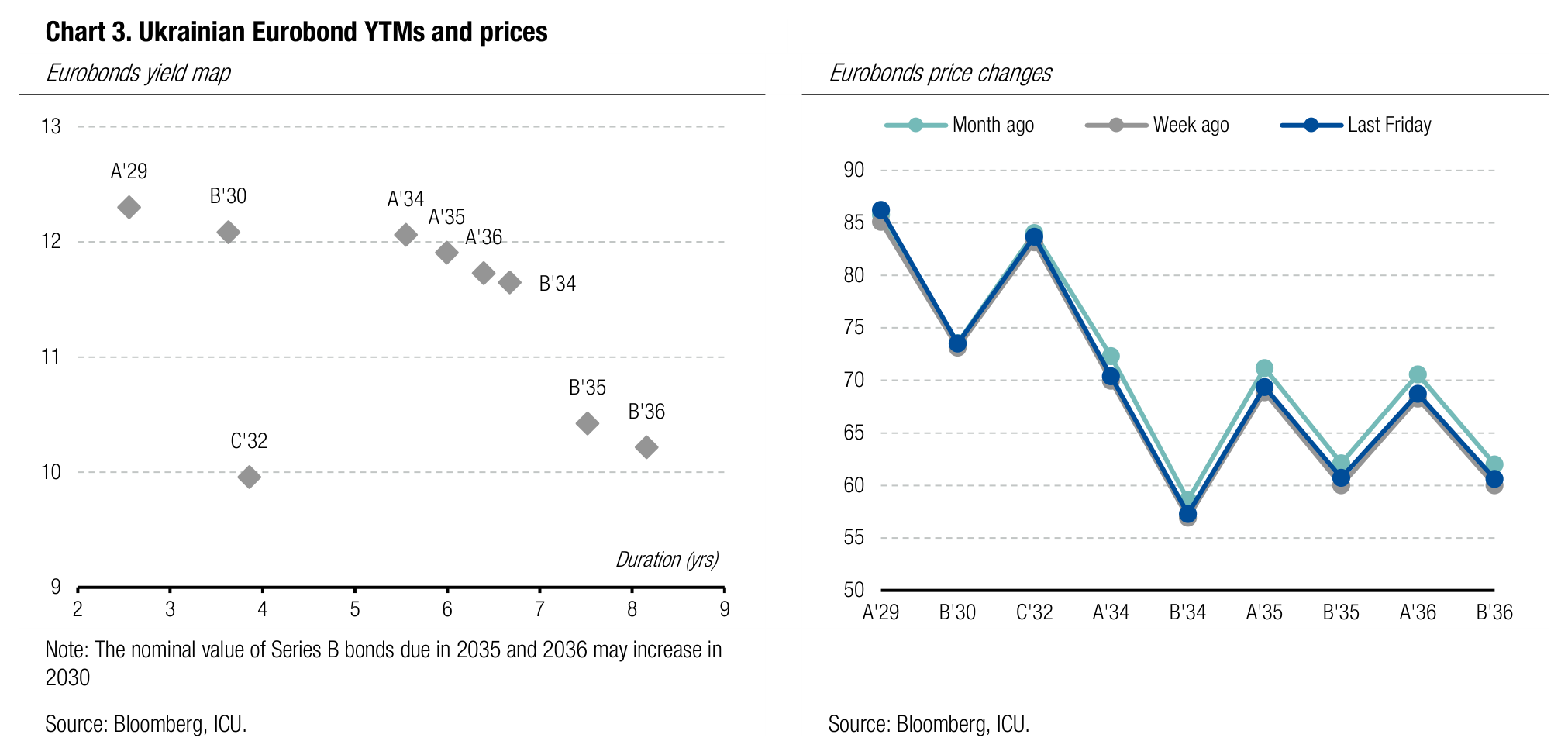
ICU view: With no major local news that shaped investor sentiment and expectations, Eurobond prices mostly float with global markets. We expect this trend to continue at least until the autumn, when peace talks may be back on the agenda.
Foreign exchange market
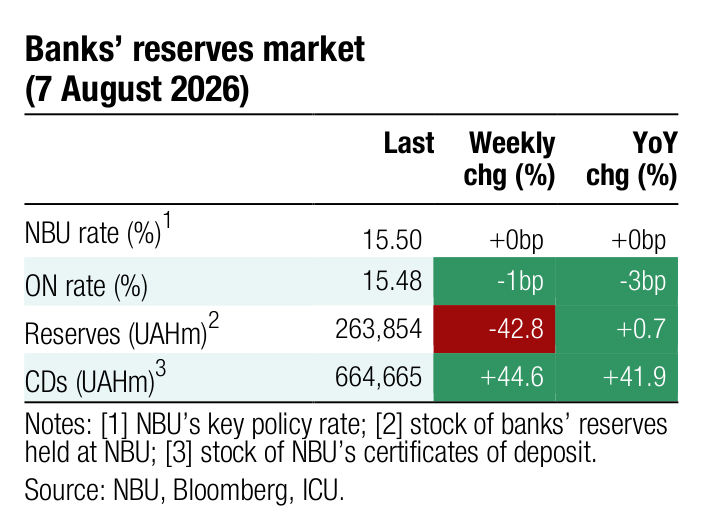
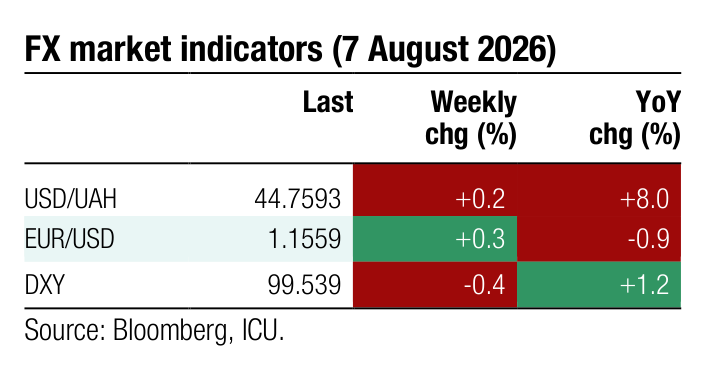
NBU provides colour on large FX interventions
Last week, the NBU provided explanation on the key drivers of large FX interventions in its fresh Inflation Report, and it also outlined further prospects for the FX market.
Last week, NBU interventions again exceeded US$1bn and also averaged above US$1bn per week since June. The foreign currency weekly deficit in the market has averaged US$0.9bn since the beginning of June and stood at US$0.7bn in four business days of last week.
In its Inflation Report, the NBU provided detailed thoughts on the substantial increase in FX market sale interventions YTD. The central bank explained the wider gap in the FX market and subsequent larger interventions is driven by the specifics of the defence part of the Ukraine Support Loan (USL) from the EU. The defence portion of the USL is channelled to government accounts and the government sells FX to the NBU to pay for domestically produced weapons and ammunition. Domestic enterprises later use a part of government payments to buy FX back from the market and make payments for imported intermediary goods. This setup naturally widens the gap between foreign currency demand and supply in the market, and the NBU has to sell more and more hard currency. The NBU said it actually performs as an intermediator that redistributes foreign currency between the government and importers of components for weapons production.
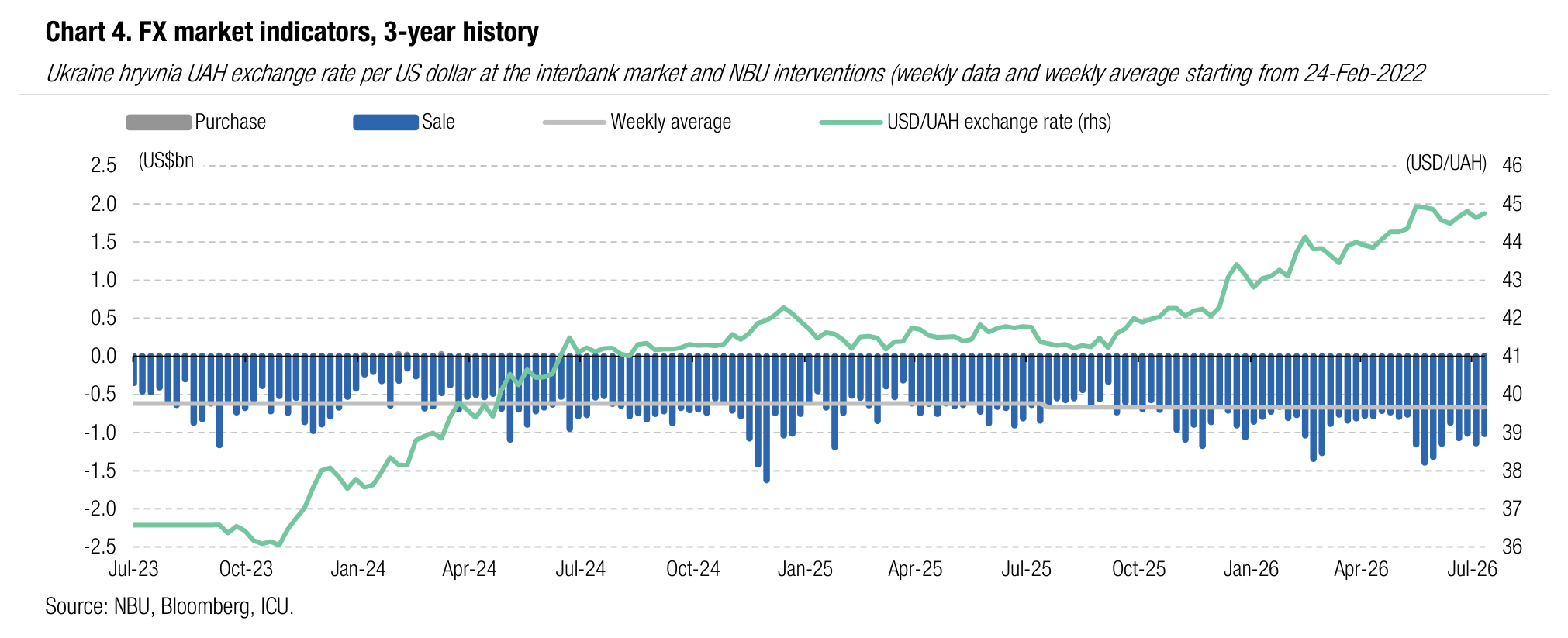
ICU view: The NBU explains an increase in interventions by the specifics of local defence sector financing with the USL. The NBU expects even further increase in structural demand for hard currency due to the scaling up of international assistance for local defence sector support. In NBU’s words, larger interventions do not necessarily imply stronger devaluation pressures or an accumulation of macroeconomic imbalances. The growth in imports of intermediary goods for the domestic defence industry does indeed imply greater needs for NBU interventions. Yet, it’s noteworthy that a sharp increase in interventions has been observed since the beginning of the year and cannot be explained solely by defence-related operations. We expect FX market imbalances to increase slightly in the coming months given bottleneck on exports of agricultural products due to heightened security risks. At the same time, we do not expect a significant depreciation of the hryvnia in the coming quarters. We maintain our exchange rate forecast at UAH45.8/US$ at end-2026. In the coming weeks, the NBU is unlikely to allow the hryvnia exchange rate to cross the UAH45/US$ level.
Economics
NBU reserves nearly flat in July
Gross international reserves of the NBU totalled $51.2bn in July, broadly unchanged from June. The reserves were equivalent to 4.2-months of the future imports, according to the NBU estimates.
FX sales by the NBU in the interbank market were significant at $4.8bn in July, one of the largest monthly sizes on record. Yet, the inflows of foreign financial aid were sufficient to offset the sale. Ukraine received $5.1bn in defence aid within the USL facility from the EU, $0.7bn loan tranche from the IMF and a $0.5bn funding via the WB accounts. Noteworthy, the EU funding within the defence component is not initially included into the NBU reserves due to restriction on its usage. Yet, once the FX proceeds from the loan are sold by the government to the NBU, the latter includes them into the reserves. The central bank said the government sold $3.4bn in July.
Noteworthy, the NBU substantially downgraded the reserve coverage estimate in its last week’s Inflation Report. While the NBU gross international reserves were nearly unchanged from June, they are now estimated to be equivalent to 4.2 months of future imports vs. 5.2 months in June. The downgrade is driven by an increased in expected imports that now includes a much more significant defence component.
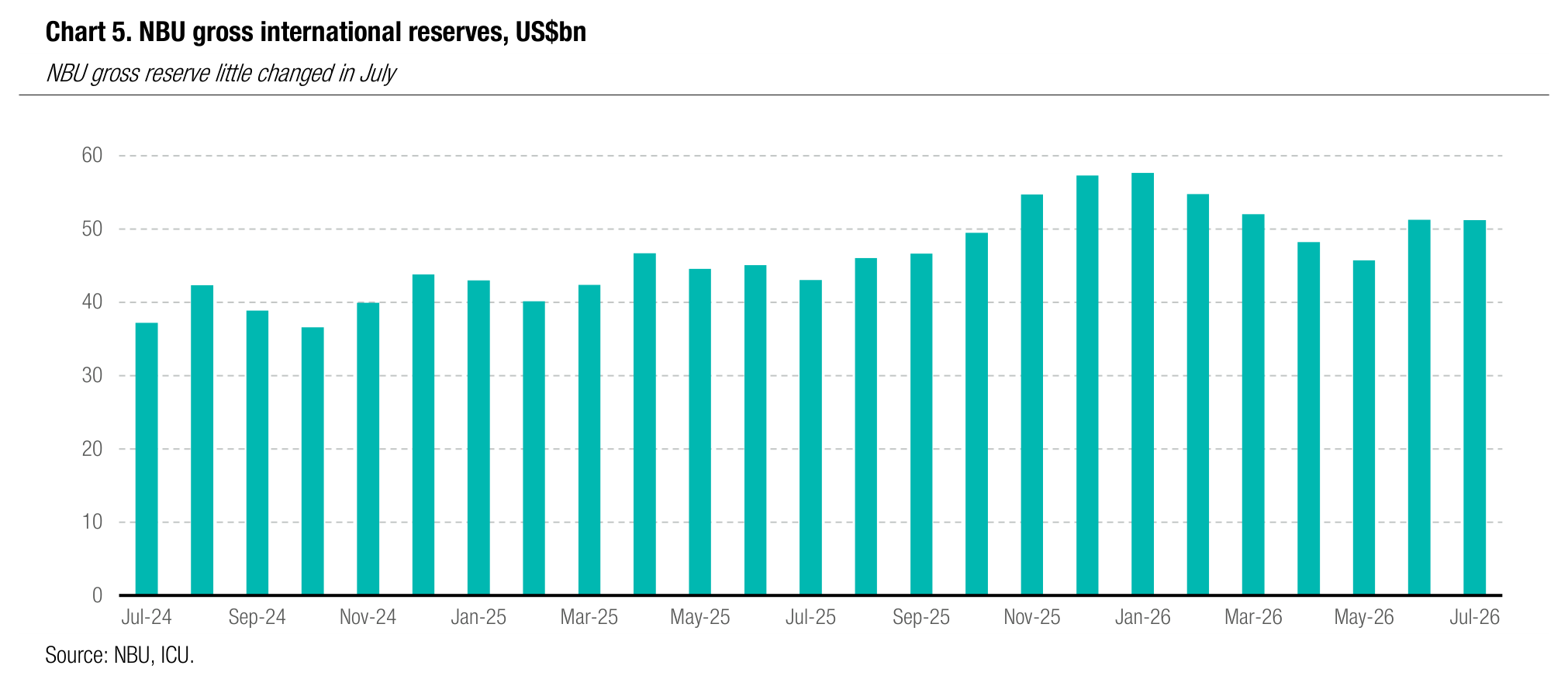
ICU view: The inflows of foreign financial aid in 2H26 are expected to be well above the 1H26 level. On top of budget aid, the allies are providing generous defence sector support which enhances the NBU capacity to protect the hryvnia and build reserves. We maintain our projection of NBU reserves close to $60bn at end-2026.